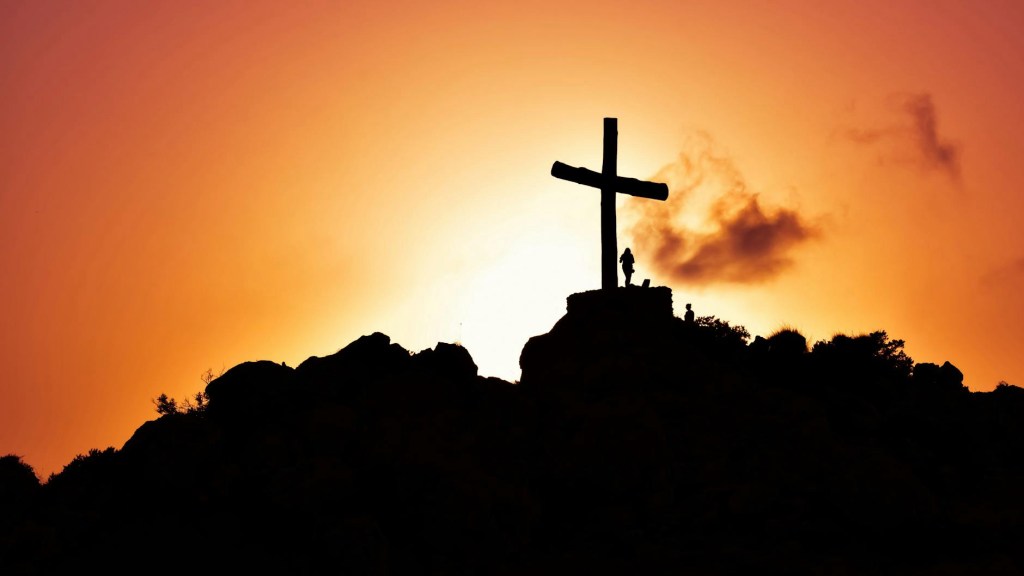
Lion Bites – Global Prophetic Alliance – Journey with Me

My precious one,

We are on a journey together. There have been many times we have ventured out and you have rushed ahead, filled with joy, excitement, and expectation but unaware of the terrain. I have rescued you, nursed the resulting wounds, and taken you back to the correct route. On other occasions, I have stretched out my hand encouraging you to proceed with me and you made slow steps, fearful that the trek would be too steep, too harsh or take you in a direction you would not be suited to. These have been learning experiences.

Today, I remind you, walk along with Me my precious one. 

Let’s move forward together hand in hand. Don’t run ahead, don’t lag behind. Understand that woven into this plan is timing, pace, rest, equipping and protection. I am with you and even though you don’t know all that is ahead I know this course. You have been prepared by Me and I know that you will advance and grow in this undertaking. 

Trust Me to lead you. 

Continue with Me in peace and let Me show you how joyful us moving together can be.

Prayer:

Lord Jesus, I praise You and ask You to give me boldness to travel with You. I understand that to do this, I need to trust You. Forgive me for the times I have doubted You or felt I could do this by myself. I desire to be led through confidence in You. So, Lord, thank-You that I get to partner with You today for I want to journey with You.

He provides me rest in rich, green fields
beside streams of refreshing water. He soothes my fears;

He makes me whole again, steering me off worn, hard paths to roads where truth and righteousness echo His name.

Even in the unending shadows of death’s darkness, I am not overcome by fear.
Because You are with me in those dark moments, near with Your protection and guidance, I am comforted.

Psalm 23:2-4 (VOICE)

#lionbites

Tuesday Morning Scripture – Psalm 23

A Song of David

The Eternal is my shepherd, He cares for me always.


He provides me rest in rich, green fields
 beside streams of refreshing water.  He soothes my fears;

He makes me whole again, steering me off worn, hard paths to roads where truth and righteousness echo His name.

Even in the unending shadows of death’s darkness, I am not overcome by fear.
Because You are with me in those dark moments, near with Your protection and guidance, I am comforted.

You spread out a table before me, provisions in the midst of attack from my enemies; You care for all my needs anointing my head with soothing, fragrant oil, filling my cup again and again with Your grace.

Certainly Your faithful protection and loving provision will pursue me where I go, always, everywhere. I will always be with the Eternal, in Your house forever.

Psalm 23:1-6 (VOICE)

Lion Bites – Global Prophetic Alliance – Build Your Boat

I told Noah to build a boat because I knew the flood was coming. Despite ridicule from every side, he listened and his life was spared.

Just as I told Noah, I am telling you – storms, flood waters and tossing waves are all a part of this life. If you’re going to stay afloat, you must build a boat and anchor it to Me. The only way to do that is through pursuing Me.

I am the Master Builder. 

I provide your blueprint in the Word. 

Your tools are the scriptures, and you use them by applying them to your daily life. 

Your supplies come from building relationship with Me, for I supply all your needs and hold you together. Your anchor comes from your faith in Me. It becomes fixed through your complete trust.

Not everyone will understand. Build anyway. It won’t make sense until the rain comes.

And when it does, you can say, “Let it pour!” Because the floods won’t phase you, the waves won’t sway you, and the winds won’t toss you about, all because you listened, built your boat and anchored yourself in Me.

Prayer: 

Father, thank-you for reminding me that I build a boat by pursuing relationship with you. Show me where I am in the process, and teach me how to live out the scriptures so I can build a sturdy boat. Help me to trust You so my anchor keeps me secure. Thank-you for making a way for me to be safe even among the most torrential of storms! 

In Jesus name, amen.

Make yourself an [a]ark of [b]gopher wood; make in it rooms (stalls, pens, coops, nests, cages, compartments) and [c]coat it inside and out with pitch (bitumen).

Genesis 6:14 (AMP)

Footnotes

[a] Genesis 6:14 The word “ark” comes from a Latin word (arca) for a box or chest. The design of the ark matched its purpose, which was not to travel through the water efficiently, but to be stable and have the greatest possible capacity for cargo. Also, such a vessel could be constructed relatively quickly, because there would be no need to form the wood used for the hull into efficient curves to maximize speed.

[b] Genesis 6:14 The type of wood is unknown. The name of the wood is a transliteration—not a translation—of the Hebrew, with no connection to the English word “gopher.”

[c] Genesis 6:14 This prevented water from seeping into the ark through the seams between the wooden planks, and may also have served to protect the wood from becoming saturated with water. Coating the ark with pitch on the outside as well as the inside was very practical. One of the worst jobs on the old wooden ships was to re-coat the inside bottom of the hull when water had seeped in, because the crewman had to quickly pave hot pitch on the hull under the water, which cooled the pitch as he worked and made the job all the more difficult—thus the nautical saying, “the devil (referring to the seam in the hull planking) to pay (i.e. pave with pitch).” The problem was eliminated or minimized on the ark, but Noah, due to his complete inexperience with sea-going vessels, would not even have known about the potential problem himself. It was imperative for him to have absolute faith in God, and to follow God’s directions word for word.

18 so that by two unchangeable things [His promise and His oath] in which it is impossible for God to lie, we who have fled [to Him] for refuge would have strong encouragement and indwelling strength to hold tightly to the hope set before us. 

19 This hope [this confident assurance] we have as an anchor of the soul [it cannot slip and it cannot break down under whatever pressure bears upon it]—a safe and steadfast hope that enters within the veil [of the heavenly temple, that most Holy Place in which the very presence of God dwells],

Hebrews 6:18-19 (AMP)

#lionbites

Monday Morning Scripture – Genesis 6

The Corruption of Mankind

1 Now it happened, when men began to multiply on the face of the land, and daughters were born to them, 

that the [a]sons of God saw that the daughters of men were beautiful and desirable; and they took wives for themselves, whomever they chose and desired. 

Then the Lord said, “My Spirit shall not strive and remain with man forever, because he is indeed flesh [sinful, corrupt—given over to sensual appetites]; nevertheless his days shall yet be [b]a hundred and twenty years.” 

There were Nephilim (men of stature, notorious men) on the earth in those days—and also afterward—when the sons of God lived with the daughters of men, and they gave birth to their children. These were the mighty men who were of old, men of renown (great reputation, fame).

The Lord saw that the wickedness (depravity) of man was great on the earth, and that every imagination or intent of the thoughts of his heart were only evil continually. 

The Lord [c]regretted that He had made mankind on the earth, and He was [deeply] grieved in His heart. 

So the Lord said, “I will destroy (annihilate) mankind whom I have created from the surface of the earth—not only man, but the animals and the crawling things and the birds of the air—because it [deeply] grieves Me [to see mankind’s sin] and I regret that I have made them.” 

But Noah found favor and grace in the eyes of the Lord.

These are the records of the generations (family history) of Noah. Noah was a righteous man [one who was just and had right standing with God], blameless in his [evil] generation; Noah walked (lived) [in habitual fellowship] with God. 

10 Now Noah became the father of three sons: Shem, Ham, and Japheth.

11 The [population of the] earth was corrupt [absolutely depraved—spiritually and morally putrid] in God’s sight, and the land was filled with violence [desecration, infringement, outrage, assault, and lust for power]

12 God looked on the earth and saw how debased and degenerate it was, for all humanity had corrupted their way on the earth and lost their true direction.

13 God said to Noah, “I intend to make an end of all that lives, for through men the land is filled with violence; and behold, I am about to [d]destroy them together with the land. 

14 Make yourself an [e]ark of [f]gopher wood; make in it rooms (stalls, pens, coops, nests, cages, compartments) and [g]coat it inside and out with pitch (bitumen)

15 This is the way you are to make it: the length of the ark shall be three hundred cubits, its width fifty cubits, and its height thirty cubits (450’ x 75’ x 45’)

16 You shall make a [h]window [for light and ventilation] for the ark, and finish it to at least a cubit (eighteen inches) from the top—and set the [entry] door of the ark in its side; and you shall make it with lower, second and third decks. 

17 For behold, I, even I, will bring a flood of waters on the earth, to destroy all life under the heavens in which there is the breath and spirit of life; everything that is on the land shall die. 

18 But I will establish My covenant (solemn promise, formal agreement) with you; and you shall come into the ark—you and your [three] sons and your wife, and your sons’ wives with you. 

19 And of every living thing [found on land], you shall bring two of every kind into the ark, to keep them alive with you; they shall be male and female. 

20 Of fowls and birds according to their kind, of animals according to their kind, of every crawling thing of the ground according to its kind—two of every kind shall come to you to keep them alive. 

21 Also take with you every kind of food that is edible, and you shall collect and store it; and it shall be food for you and for them.” 

22 So Noah did this; according to all that God commanded him, that is what he did.

Genesis 6:1-22 (AMP)

Footnotes

[a] Genesis 6:2 This phrase has been interpreted as a reference to: (a) royalty or rulers possessed by fallen angels, (b) the descendants of Seth who called upon the Lord (see 4:26), or (c) fallen angels (cf Job 1:6).

[b] Genesis 6:3 This may refer to the time given man to repent before the flood, or to the normative human life span after the flood.

[c] Genesis 6:6 The expressions of regret and grief seen here do not mean that God acknowledged the creation of man as a mistake on His part. God is omniscient, knowing all things (Ps 139:16) and He knew that mankind would come into sin and wickedness. God grieved over the sin of man because it was appropriate for Him to do so.

[d] Genesis 6:13 Enoch (the descendant of Seth, not Cain) had warned these people (Jude 14, 15); Noah had preached righteousness to them (2 Pet 2:5); and God’s Spirit had been struggling with them (Gen 6:3). Yet they had rejected God.

[e] Genesis 6:14 The word “ark” comes from a Latin word (arca) for a box or chest. The design of the ark matched its purpose, which was not to travel through the water efficiently, but to be stable and have the greatest possible capacity for cargo. Also, such a vessel could be constructed relatively quickly, because there would be no need to form the wood used for the hull into efficient curves to maximize speed.

[f] Genesis 6:14 The type of wood is unknown. The name of the wood is a transliteration—not a translation—of the Hebrew, with no connection to the English word “gopher.”

[g] Genesis 6:14 This prevented water from seeping into the ark through the seams between the wooden planks, and may also have served to protect the wood from becoming saturated with water. Coating the ark with pitch on the outside as well as the inside was very practical. One of the worst jobs on the old wooden ships was to re-coat the inside bottom of the hull when water had seeped in, because the crewman had to quickly pave hot pitch on the hull under the water, which cooled the pitch as he worked and made the job all the more difficult—thus the nautical saying, “the devil (referring to the seam in the hull planking) to pay (i.e. pave with pitch).” The problem was eliminated or minimized on the ark, but Noah, due to his complete inexperience with sea-going vessels, would not even have known about the potential problem himself. It was imperative for him to have absolute faith in God, and to follow God’s directions word for word.

[h] Genesis 6:16 Or roof.

Monday Morning Scripture – Hebrews 6

The Peril of Falling Away

1 Therefore let us get past the elementary stage in the teachings about the Christ, advancing on to maturity and perfection and spiritual completeness, [doing this] without laying again a foundation of repentance from dead works and of faith toward God, 

of teaching about washings (ritual purifications), the laying on of hands, the resurrection of the dead, and eternal judgment. [These are all important matters in which you should have been proficient long ago.] 

And we will do this [that is, proceed to maturity], if God permits. 

For [it is impossible to restore to repentance] those who have once been enlightened [spiritually] and who have [a]tasted and consciously experienced the heavenly gift and have shared in the Holy Spirit, 

and have tasted and consciously experienced the good word of God and the powers of the age (world) to come, 

[b]and then have fallen away—it is impossible to bring them back again to repentance, since they again nail the Son of God on the cross [for as far as they are concerned, they are treating the death of Christ as if they were not saved by it], and are holding Him up again to public disgrace. 

For soil that drinks the rain which often falls on it and produces crops useful to those for whose benefit it is cultivated, receives a blessing from God; 

but if it persistently produces thorns and thistles, it is worthless and close to being cursed, and it ends up being burned.

Better Things for You

But, beloved, even though we speak to you in this way, [c]we are convinced of better things concerning you, and of things that accompany salvation. 

10 For God is not unjust so as to forget your work and the love which you have shown for His name in ministering to [the needs of] the saints (God’s people), as you do. 

11 And we desire for each one of you to show the same diligence [all the way through] so as to realize and enjoy the full assurance of hope until the end, 

12 so that you will not be [spiritually] sluggish, but [will instead be] imitators of those who through faith [lean on God with absolute trust and confidence in Him and in His power] and by patient endurance [even when suffering] are [now] inheriting the promises.

13 For when God made the promise to Abraham, He swore [an oath] by Himself, since He had no one greater by whom to swear, 

14 saying, “I will surely bless you and I will surely multiply you.” 

15 And so, having patiently waited, he realized the promise [in the miraculous birth of Isaac, as a pledge of what was to come from God]

16 Indeed men swear [an oath] by [d]one greater than themselves, and with them [in all disputes] the oath serves as confirmation [of what has been said] and is an end of the dispute. 

17 In the same way God, in His desire to show to the heirs of the promise the unchangeable nature of His purpose, intervened and guaranteed it with an oath, 

18 so that by two unchangeable things [His promise and His oath] in which it is impossible for God to lie, we who have fled [to Him] for refuge would have strong encouragement and indwelling strength to hold tightly to the hope set before us. 

19 This hope [this confident assurance] we have as an anchor of the soul [it cannot slip and it cannot break down under whatever pressure bears upon it]—a safe and steadfast hope that enters within the veil [of the heavenly temple, that most Holy Place in which the very presence of God dwells]

20 where Jesus has entered [in advance] as a forerunner for us, having become a High Priest forever according to the order of [e]Melchizedek.

Hebrews 6:1-20 (AMP)

Footnotes

[a] Hebrews 6:4 This is the same Greek word that is used in Matt 27:34 regarding Jesus’ tasting the wine mixed with gall during His crucifixion. After tasting what was being offered to Him He refused to drink it. Perhaps the use of this word in this passage (vv 4-6) refers to those who superficially “tasted” the gospel and outwardly appeared to embrace the Christian experience, but inwardly never committed in full surrender to Christ. In this case, the act of “falling away” was simply the public expression of their true position and their rejection of Jesus as Messiah regardless of the evidence.

[b] Hebrews 6:6 This passage is one of the most difficult to interpret in Hebrews. Four major views have been suggested: 1) some interpret the passage to teach the possibility of loss of salvation, 2) some see the text as hypothetical, with the author using an illustration of what would occur in the case of apostasy, but which, in fact, cannot occur, 3) some suggest the passage refers to apparent believers who are in the church, but who are not truly saved. These commit apostasy, depart from the fellowship, and thus give evidence they were not genuinely converted, and 4) the loss of rewards view that suggests that the context indicated the people described in vv 4-6 are genuine believers who commit willful sin and fail to press on to maturity. These are disciplined by God in this life, and lose rewards at the Judgment Seat of Christ along the lines of 1 Cor 3:11-17.

[c] Hebrews 6:9 The concerns of the writer of Hebrews as outlined in vv 1-8 have not happened to the Hebrew believers and the writer does not expect them to happen.

[d] Hebrews 6:16 Or Him who is greater.

[e] Hebrews 6:20 See note 7:3.

Lion Bites – Global Prophetic Alliance – Godly Influence

Dear One, what changes when you read My Word? King Josiah was a righteous man. He found the law of Moses while restoring my temple. He read it and realised that his generation had been disobedient, so he wept and humbly repented. He could have stopped at this, but instead he sought My counsel for all those in his sphere of authority. Even though their sin still had consequences, he continued changing the environment and atmosphere to make it pleasing to Me. He read My Words to all those he had God-given authority over, causing them to come into covenant relationship with Me. He removed the priests, altars, idols and emblems of other gods. 

Beloved, consider your sphere of influence. People in it may choose not to follow Me, but will you still seek My heart for them? 

If they don’t know My ways yet, will you show them? 

If there are items you know do not please Me, will you remove them? 

Today I want to remind you that your God-given influence is greater than you realise!

Activation:

With a piece of paper, take a moment with Holy Spirit and ask Him to show you your sphere of influence. This may include roles at home, work, church or in your community. Write each role down and and ask God for insight as to how you can steward these areas well. Ask Him for an understanding of what your specific assignment is for each area of influence.

He did what was right in the sight of the LORD, and walked in the ways of David his father (forefather) and did not turn aside either to the right or to the left.

2 Chronicles 34:2 (AMP)

Let your light shine before men in such a way that they may see your good deeds and moral excellence, and [recognize and honor and] glorify your Father who is in heaven.

Matthew 5:16 (AMP)

#lionbites

Friday Morning Scripture – 2 Chronicles 34

Josiah Succeeds Amon in Judah

1 Josiah was eight years old when he became king, and he reigned for thirty-one years in Jerusalem. 

He did what was right in the sight of the LORD, and walked in the ways of David his father (forefather) and did not turn aside either to the right or to the left. 

For in the eighth year of his reign, while he was still young (sixteen), he began to seek after and inquire of the God of his father David; and in the twelfth year he began to purge Judah and Jerusalem of the high places, the Asherim, and the carved and cast images. 

They tore down the altars of the Baals in his presence; he cut to pieces the incense altars that were high above them; he also smashed the Asherim and the carved images and the cast images to pieces, and ground them to dust and scattered it on the graves of those who had sacrificed to them. 

Then Josiah burned the bones of the [pagan] priests on their altars and purged and cleansed Judah and Jerusalem. 

In the cities of Manasseh, Ephraim, Simeon, and as far as Naphtali, in their surrounding ruins, 

he tore down the altars and beat and crushed the Asherim and the carved images into powder, and cut to pieces all the incense altars throughout the land of Israel. Then he returned to Jerusalem.

Josiah Repairs the Temple

In the eighteenth year of Josiah’s reign, when he had purged the land and the [LORD’s] house, he sent Shaphan the son of Azaliah, and Maaseiah the governor of the city, and Joah the son of Joahaz the recorder (secretary), to repair the house of the LORD his God. 

When they came to Hilkiah the high priest, they delivered the money that had been brought into the house of God, which the Levites, who guarded the doors, had collected from Manasseh and Ephraim, and from all the remnant of Israel, and from all Judah and Benjamin, and the inhabitants of Jerusalem. 

10 Then they gave it to the workmen who were appointed over the house of the LORD, and the workmen who were working in the house of the LORD gave it [to others] to repair and restore the house (temple)

11 They in turn gave it to the carpenters and builders to buy quarried stone and timber for couplings (trusses, braces) and to make beams for the houses which the kings of Judah had let go to ruin. 

12 The men did the work faithfully with foremen over them to supervise and inspect [their work]: Jahath and Obadiah, the Levites of the sons of Merari, and Zechariah and Meshullam of the sons of the Kohathites, and the Levites, all who were skillful with musical instruments. 

13 They were also in charge of the burden bearers [who carried heavy loads], and supervised all the workmen in any kind of service; and some of the Levites were scribes and officials and gatekeepers.

Hilkiah Discovers Lost Book of the Law

14 When they were bringing out the money which had been brought into the house of the LORD, Hilkiah the priest found the Book of the Law of the LORD given by Moses. 

15 Hilkiah told Shaphan the scribe, “I have found the Book of the Law in the house of the LORD.” And he gave the book to Shaphan. 

16 Shaphan brought the book to the king, but [first] reported further to him, “Your servants are doing everything that was entrusted to them. 

17 They have emptied out the money that was found in the house of the LORD, and have delivered it into the hands of the overseers and the workmen.” 

18 Then Shaphan the scribe told the king, “Hilkiah the priest has given me a book.” And Shaphan read from it in the presence of the king.

19 When the king heard the words of the Law, he tore his clothes. 

20 Then the king commanded Hilkiah, Ahikam the son of Shaphan, Abdon the son of Micah, Shaphan the scribe, and Asaiah a servant of the king, saying, 

21 “Go, inquire of the LORD for me and for those who are left in Israel and in Judah in regard to the words of the book which has been found; for great is the wrath of the LORD which has been poured out on us because our fathers have not kept and obeyed the word of the LORD, to act in accordance with everything that is written in this book.”

Huldah, the Prophetess, Speaks

22 So Hilkiah and those whom the king had told went to Huldah the prophetess, the wife of Shallum the son of Tokhath, the son of Hasrah, keeper of the wardrobe (now she lived in Jerusalem, in the Second Quarter); and they spoke to her about this. 

23 And she answered them, “Thus says the LORD, the God of Israel: ‘Tell the man who sent you to me, 

24 thus says the LORD: “Behold, I am bringing evil on this place and on its inhabitants, all the curses that are written in the book which they have read in the presence of the king of Judah. 

25 Because they have abandoned (rejected) Me and have burned incense to other gods, in order to provoke Me to anger with all the works of their hands, [a]My wrath will be poured out on this place and it will not be extinguished.”’ 

26 But you shall say the following to King Josiah of Judah, who sent you to inquire of the LORD: ‘Thus says the LORD God of Israel, concerning the words which you have heard, 

27 “Because your heart was gentle and penitent and you humbled yourself before God when you heard His words against this place and its inhabitants, and humbled yourself before Me, and tore your clothes and wept before Me, I also have heard you,” declares the LORD. 

28 “Behold, I will gather you to your fathers [in death], and you shall be gathered to your grave in peace, and your eyes shall not see all the evil which I am going to bring on this place and on its inhabitants.”’” So they brought back word to the king.

29 Then the king sent word and gathered all the elders of Judah and Jerusalem. 

30 And the king went up to the house of the LORD with all the men of Judah, the inhabitants of Jerusalem, the priests, the Levites, and all the people, from the greatest to the least; and he read aloud so they could hear all the words of the Book of the Covenant which was found in the house of the LORD.

Josiah’s Good Reign

31 Then the king stood in his place and made a covenant before the LORD—to walk after (obey) the LORD, and to keep His commandments, His testimonies, and His statutes with all his heart and with all his soul, to perform the words of the covenant written in this book. 

32 Further, he made all who were present in Jerusalem and Benjamin stand [with him, in confirmation of it]. So the inhabitants of Jerusalem acted in accordance with the covenant of God, the God of their fathers. 

33 Josiah removed all the [pagan] repulsive things from all the lands belonging to the sons (descendants) of Israel, and made all who were present in Israel serve the LORD their God. Throughout his lifetime they did not turn from following the LORD God of their fathers.

2 Chronicles 34:1-33 (AMP)

Footnotes

[a] 2 Chronicles 34:25 God’s wrath would “not be extinguished,” but that does not mean it would go on forever. It means it will consume all of what it was meant to consume.

Friday Morning Scripture – Matthew 5:13-20

Disciples and the World

13 “You are the [a]salt of the earth; but if the salt has [b]lost its taste (purpose), how can it be made salty? It is no longer good for anything, but to be thrown out and walked on by people [when the walkways are wet and slippery].

14 “You are the light of [Christ to] the world. A city set on a hill cannot be hidden; 

15 nor does anyone light a lamp and put it under a basket, but on a lampstand, and it gives light to all who are in the house. 

16 Let your light shine before men in such a way that they may see your good deeds and moral excellence, and [recognize and honor and] glorify your Father who is in heaven.

17 “Do not think that I came to do away with or undo the [c]Law [of Moses] or the [writings of the] Prophets; I did not come to destroy but to fulfill.

18 For I assure you and most solemnly say to you, until heaven and earth pass away, not the smallest letter or stroke [of the pen] will pass from the Law until all things [which it foreshadows] are accomplished. 

19 So whoever breaks one of the least [important] of these commandments, and teaches others to do the same, will be called least[important] in the kingdom of heaven; but whoever practices and teaches them, he will be called great in the kingdom of heaven.

20 “For I say to you that unless your righteousness (uprightness, moral essence) is more than that of the scribes and Pharisees, you will never enter the kingdom of heaven.

Matthew 5:13-20 (AMP)

Footnotes

[a] Matthew 5:13 In ancient times salt was often used as a preservative. Similarly, followers of Christ are to preserve both the gospel message and Christian values in the secular world.

[b] Matthew 5:13 The salt from the Dead Sea contains impurities that affect its qualities as a seasoning and as a preservative.

[c] Matthew 5:17 i.e. the Pentateuch.

    Lion Bites – Global Prophetic Alliance – Harvest

    Look around you, what do you see? I see a harvest that is ripe, waiting, and eager to hear My words.

    My precious child, I have given you a voice and a message, and in this season, I am equipping you with sight to see where I am working. I am equipping you with boldness to leave your comfort zones and I am equipping you with other workers for I am sending you out together.

    I am pleased to call you my witness and I am pleased to confirm your words about Me with signs and wonders. It is time to break partnership with any fear that has held you back. Go in faith and joy.

    Activation: Ask the Holy Spirit to show you where there is a harvest ready and waiting. Ask Him to show you your fellow workers. Ask Him to reveal any stumbling blocks in your thinking that prevent you from stepping out more in telling others about Him. Break agreement with these lies and ask Him for a fresh passion and boldness.

    Do you not say, ‘It is still four months until the harvest comes?’ Look, I say to you, raise your eyes and look at the fields and see, they are white for harvest.

    John 4:35 (AMP)

    29 And now, Lord, observe their threats [take them into account] and grant that Your bond-servants may declare Your message [of salvation] with great confidence, 

    30 while You extend Your hand to heal, and signs and wonders (attesting miracles) take place through the name [and the authority and 

    Acts 4:29-30 (AMP)

    #lionbites

    Thursday Morning Scripture – John 4:1-45

    Jesus Goes to Galilee

    1 So when the Lord learned that the Pharisees had been told that Jesus was making and baptizing more disciples than John 

    (although Jesus Himself was not baptizing, but His disciples were), 

    He left Judea and returned again to Galilee. 

    Now [a]He had to go through [b]Samaria. 

    So He arrived at a Samaritan town called Sychar, near the tract of land that Jacob gave to his son Joseph; 

    and Jacob’s well was there. So Jesus, tired as He was from His journey, sat down by the well. It was then about the sixth hour (noon).

    The Samaritan Woman

    Then a woman from Samaria came to draw water. Jesus said to her, “Give Me a drink”— 

    For His disciples had gone off into the city to buy food— 

    The Samaritan woman asked Him, “How is it that You, being a Jew, ask me, a [c]Samaritan woman, for a drink?” (For Jews have nothing to do with Samaritans.) 

    10 Jesus answered her, “If you knew[about] God’s gift [of eternal life], and who it is who says, ‘Give Me a drink,’ you would have asked Him[instead], and He would have given you living water (eternal life).” 

    11 She said to Him, “Sir, [d]You have nothing to draw with [no bucket and rope] and the well is deep. Where then do You get that living water? 

    12 Are You greater than our father  [e]Jacob, who gave us the well, and who used to drink from it himself, and his sons and his cattle also?” 

    13 Jesus answered her, “Everyone who drinks this water will be thirsty again. 

    14 But whoever drinks the water that I give him will never be thirsty again. But the water that I give him will become in him a spring of water [satisfying his thirst for God] welling up[continually flowing, bubbling within him] to eternal life.”

    15 The woman said to Him, “Sir, give me this water, so that I will not get thirsty nor [have to continually] come all the way here to draw.” 

    16 At this, Jesus said, “Go, call your husband and come back.”

    17 The woman answered, “I do not have a husband.” Jesus said to her, “You have correctly said, ‘I do not have a husband’; 

    18 for you have had five husbands, and the man you are now living with is not your [f]husband. You have said this truthfully.” 

    19 The woman said to Him, “Sir, I see that You are a prophet. 

    20 Our fathers worshiped on this mountain, but you Jews say that the place where one ought to worship is in Jerusalem [at the temple].” 

    21 Jesus replied, “Woman, believe Me, a time is coming [when God’s kingdom comes] when you will worship the Father neither on this mountain nor in Jerusalem. 

    22 You [Samaritans] do not know what you worship; we [Jews] do know what we worship, for salvation is from the Jews. 

    23 But a time is coming and is already here when the true worshipers will worship the Father in spirit [from the heart, the inner self] and in truth; for the Father seeks such people to be His worshipers. 

    24 God is spirit [the Source of life, yet invisible to mankind], and those who worship Him must worship in spirit and truth.” 

    25 The woman said to Him, “I know that Messiah is coming (He who is called Christ—the Anointed); when that One comes, He will tell us everything [we need to know].” 

    26 Jesus said to her, “I who speak to you, am He (the Messiah).”

    27 Just then His disciples came, and they were surprised to find Him talking with a woman. However, no one said, “What are You asking about?” or, “Why are You talking to her?” 

    28 Then the woman left her water jar, and went into the city and began telling the people, 

    29 “Come, see a man who told me all the things that I have done! Can this be the Christ (the Messiah, the Anointed)?” 

    30 So the people left the city and were coming to Him.

    31 Meanwhile, the disciples were urging Jesus [to have a meal], saying, “Rabbi (Teacher), eat.” 

    32 But He told them, “I have food to eat that you do not know about.” 

    33 So the disciples said to one another, “Has anyone brought Him something to eat?” 

    34 Jesus said to them, “My food is to do the will of Him who sent Me and to completely finish His work. 

    35 Do you not say, ‘It is still four months until the harvest comes?’ Look, I say to you, raise your eyes and look at the fields and see, they are white for harvest. 

    36 Already the reaper is receiving his wages and he is gathering fruit for eternal life; so that he who plants and he who reaps may rejoice together. 

    37 For in this case the saying is true, ‘One[person] sows and another reaps.’ 

    38 I sent you to reap [a crop] for which you have not worked. Others have worked and you have been privileged to reap the results of their work.”

    The Samaritans

    39 Now many Samaritans from that city believed in Him and trusted Him [as Savior] because of what the woman said when she testified, “He told me all the things that I have done.” 

    40 So when the Samaritans came to Jesus, they asked Him to remain with them; and He stayed there two days. 

    41 Many more believed in Him [with a deep, abiding trust] because of His word [His personal message to them]

    42 and they told the woman, “We no longer believe just because of what you said; for [now] we have heard Him for ourselves and know [with confident assurance] that this One is truly the Savior of [all] the world.”

    43 After the two days He went on from there into Galilee. 

    44 For Jesus Himself declared that a prophet has no honor in his own country. 

    45 So when He arrived in Galilee, the Galileans [g]welcomed Him, since they had seen all the things that He did in Jerusalem at the feast; for they too came to the feast.

    John 4:1-45 (AMP)

    Footnotes

    [a] John 4:4 Jesus went through Samaria to show that He is the Savior of all people.

    [b] John 4:4 Samaria was centrally located between Judea (south) and Galilee (north). The Jews despised Samaritans because they were Jews who had intermarried with non-Jews and followed a heretical religion. Most Jews traveled out of their way to avoid Samaria.

    [c] John 4:9 The Jews considered Samaritan women ceremonially unclean.

    [d] John 4:11 The woman’s response is due to the fact that “living water” was the normal description for running water. She probably thought that Jesus was referring to the underground water source that fed the well.

    [e] John 4:12 Jacob (renamed Israel in Gen 32:28) was the son of Isaac, grandson of Abraham and father of the twelve sons who established the twelve tribes of Israel.

    [f] John 4:18 God does not regard cohabitation as marriage. Marriage is a binding, legal covenant between a man and a woman.

    [g] John 4:45 In view of John’s wording in v 44 (For Jesus Himself declared…), the Galileans evidently were very interested in His miracles, but did not recognize or regard Jesus as their source of salvation.